


Quick answer
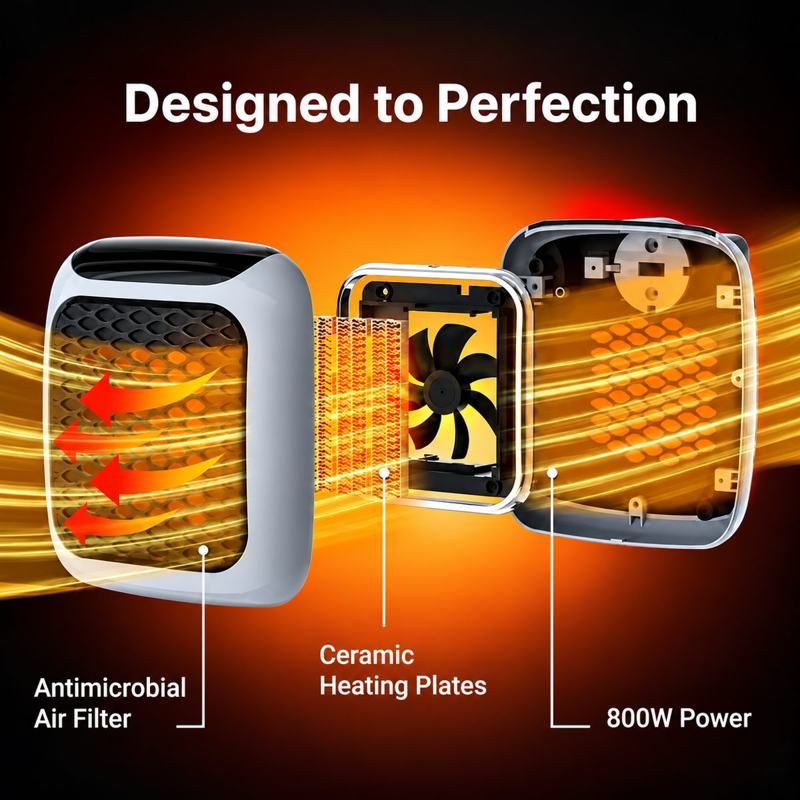
A ceramic space heater uses a ceramic heating element to provide supplementary room warmth. RapidHeat is a plug-in wall PTC ceramic heater for small-to-medium rooms, with a remote, digital thermostat, high and eco modes, timer and overheat protection. Choose it around safe outlet placement and everyday comfort, not promises of whole-home heating.
How ceramic heaters work
A ceramic element warms up as electricity passes through it, and a fan pushes the heat into the room. As the element heats up, its resistance rises, which limits how hot it can get.
Ceramic vs coil heaters
Older coil heaters glow red-hot. Ceramic elements run cooler on the surface while still delivering quick warmth.
- Heat within seconds
- Lower surface temperature than exposed coils
- Even airflow
Choose your bundle
Free shipping
Prices in CAD. Most homes need one per room.
Your order
- 2 RapidHeat heatersCA$119.00
- Tracked shipping across CanadaFREE
- 30-day guaranteeIncluded
TotalCA$119.00
You save CA$200
Ships with tracking. Free across Canada. You won't be charged until you review your order.
- Free Canada shipping
- 30-day returns
- Secure checkout
What PTC ceramic heating means in everyday use
PTC stands for positive temperature coefficient. As the ceramic element warms, its electrical resistance increases, helping regulate the element itself. That describes the heating material, not a promise that every part of the appliance stays cool or that the room will always reach your preferred temperature. Treat an operating heater as a heat source.
RapidHeat combines that ceramic element with airflow to distribute warmth. It is intended to supplement existing heating in small-to-medium rooms, such as an enclosed office or sitting room. The practical question is whether it improves comfort where you spend time, while allowing the outlet, air openings and surrounding furnishings to remain safely clear.
| Feature | Useful role | Important limit |
|---|---|---|
| PTC ceramic element | Provides supplementary heat | Does not make the appliance safe to cover. |
| Digital thermostat | Supports a chosen comfort setting | Does not ensure identical temperatures everywhere. |
| Remote and timer | Make session controls convenient | Do not replace supervision. |
| Direct wall plug | Avoids a trailing cord | Requires suitable outlet placement. |
Separate element regulation from room-temperature control
The PTC element and digital thermostat perform different jobs. Element behaviour concerns the heating material; the thermostat responds to temperature information to manage room comfort. Neither removes the need to follow the operating instructions, and neither guarantees an identical temperature at your chair, beside a window and near the wall outlet.
Use a modest setting first and give the room time to respond before making repeated changes. If the seat beside an exterior wall remains uncomfortable, investigate draughts and furniture placement rather than simply raising the setting. A heater can add warmth without correcting the underlying reason that one part of the room feels colder.
Compare ceramic heaters on useful features, not labels
Ceramic describes a type of heating element, not an automatic advantage in every buying decision. Electric resistance heaters broadly convert their electricity into heat at the point of use. Different controls, placement requirements and operating routines can matter more to your experience than a claim that one element material creates cheaper heat.
RapidHeat includes a remote, digital thermostat, high and eco modes, and a timer. Those features offer ways to manage an attended session, but their value depends on how you use them. Compare an alternative by asking where it can operate safely, whether its controls suit your routine and how easily you can switch it off.
Check the wall outlet before choosing the room
This is a direct-plug wall heater for a suitable 120V outlet. Its position is therefore determined by the outlet, not by whichever corner looks empty. Check that furniture, curtains, bedding and stored items will not obstruct the heater or crowd its airflow. Do not place belongings beneath it just because the floor remains available.
Plug directly into the wall rather than using an extension cord or power bar. A loose, damaged or discoloured connection needs attention before use. If the plug becomes unusually hot, you smell burning or the circuit repeatedly trips, stop using the heater and seek qualified electrical advice instead of moving it from outlet to outlet.
Use the controls for an occupied heating session
Choose the operating mode according to the instructions and the comfort you need. High and eco are available, but the mode names alone do not establish a particular electricity saving or tell you exactly how the room will respond. Keep changes deliberate so you can judge whether the new setting improves comfort at your normal seat.
The remote makes adjustments convenient when the wall controls are less accessible. The timer can help define the end of an occupied session, but you should still turn the heater off before leaving or going to bed. A digital display is useful information, not a substitute for checking the room and appliance yourself.
Keep ceramic-heater safety separate from marketing language
Overheat protection is a backup feature, not permission to cover the appliance, restrict airflow or run it unattended. Do not assume a ceramic heater is safe to touch while operating. Keep children and pets away, and ensure everyone sharing the room understands that the wall unit is a heater rather than an ordinary outlet accessory.
NFPA advises keeping combustible materials at least one metre from heating equipment and turning portable heaters off when leaving the room or going to bed. Follow the product instructions as well, including any more restrictive placement requirements. [1](https://www.nfpa.org/-/media/project/storefront/catalog/files/safety-tip-sheets/heatingsafetytips.pdf) If you cannot maintain suitable clearance at the available outlet, choose a different heating arrangement.
Compare Canadian purchase prices with your actual needs
RapidHeat costs CA$79 for one, CA$119 for two, CA$159 for three and CA$239 for four. Free shipping in Canada and 30-day returns are offered. Decide how many suitable rooms you genuinely have before selecting a bundle; a lower average purchase price does not mean that additional heaters are necessary for your household.
Electricity is a separate expense, and no fixed daily running cost can be established from the ceramic label. Actual use depends on operating time, control behaviour, room conditions and your electricity tariff. If your main goal is a lower overall heating bill, compare the whole household bill rather than treating the new appliance as an automatic saving.
Evaluate comfort before deciding to keep it
During the return period, try the heater in its intended room while you are present. Keep the original packaging and order information, and review the return terms before beginning. Note whether warmth reaches your usual seat, whether the outlet remains accessible and whether the controls are easy enough to use without interrupting your routine.
Assess the fan during reading, conversation or work rather than assuming it will suit every activity. If the room remains uncomfortable, consider insulation, air leakage or the main heating system. For longer-term heating decisions, Natural Resources Canada explains how heat pumps move heat rather than operating like resistance heaters. [2](https://natural-resources.canada.ca/energy-efficiency/energy-star/heating-cooling-heat-pump)
RapidHeat: honest pros and cons
Good for
- PTC ceramic heating for supplementary room comfort.
- Direct-plug design avoids a trailing cord.
- Remote and digital thermostat simplify adjustments.
- High and eco modes plus a timer.
- Free shipping in Canada and 30-day returns.
Not ideal if
- Not a replacement for primary household heating.
- Wall-outlet location limits placement.
- Ceramic construction does not guarantee lower bills.
- Fan operation may not suit every activity.
Sources
RapidHeat vs a typical space heater
| Feature | RapidHeat | Typical |
|---|---|---|
| Plugs straight into the wall | ||
| Remote control included | ||
| Digital thermostat + 2 modes | ||
| Timer + overheat protection | ||
| Free shipping in Canada |
Frequently asked questions
Is a ceramic space heater different from a fan heater?
The terms describe different aspects of a heater. Ceramic refers to the heating element, while fan describes how air is moved. A ceramic heater can use a fan to distribute warmth, as RapidHeat does. Compare the complete appliance and controls rather than treating the terms as mutually exclusive categories.
Does PTC mean I can leave it running alone?
No. Self-regulating element behaviour does not make unattended operation appropriate. Switch the heater off when leaving the room or going to bed. Keep airflow clear and follow the instructions even when the thermostat, timer and overheat protection are available.
Will ceramic heat dry clothes safely?
Do not drape clothes over the heater or position laundry in its clearance space. Restricting airflow and bringing fabrics close to a heat source creates a hazard. Use a suitable drying arrangement away from heating equipment instead.
Can I use it in a large open room?
RapidHeat is intended for small-to-medium rooms. Open layouts, draughts and high ceilings can make supplementary heating less effective. Do not assume that several units will solve a larger heating problem; investigate the main system and electrical capacity first.
Does eco mode guarantee a cheaper electricity bill?
No. The result depends on how the mode operates, how long you use the heater and whether other heating demand actually changes. A mode label alone cannot establish a household saving. Keep comfort and building protection in mind when comparing routines.
What should I check when it arrives?
Read the instructions, inspect the appliance and confirm that your intended wall outlet offers safe clearance. Keep packaging and order details while evaluating an attended session. If anything appears damaged or the connection behaves abnormally, stop and contact support rather than continuing the trial.
Are ceramic heaters energy efficient?
All electric resistance heaters turn nearly 100% of their electricity into heat. Ceramic heaters save money by heating one room quickly, so you run them less.
How much does RapidHeat cost in Canada?
RapidHeat is CA$79 for one, CA$119 for two, CA$159 for three and CA$239 for four, with free shipping across Canada.
Can I return it?
Yes. Contact us within 30 days of delivery to start a return.
Related
Choose your bundle
Free shipping
Prices in CAD. Most homes need one per room.
Your order
- 2 RapidHeat heatersCA$119.00
- Tracked shipping across CanadaFREE
- 30-day guaranteeIncluded
TotalCA$119.00
You save CA$200
Ships with tracking. Free across Canada. You won't be charged until you review your order.
- Free Canada shipping
- 30-day returns
- Secure checkout
- 30-day guarantee
- Free shipping in Canada
- Secure checkout