


Quick answer
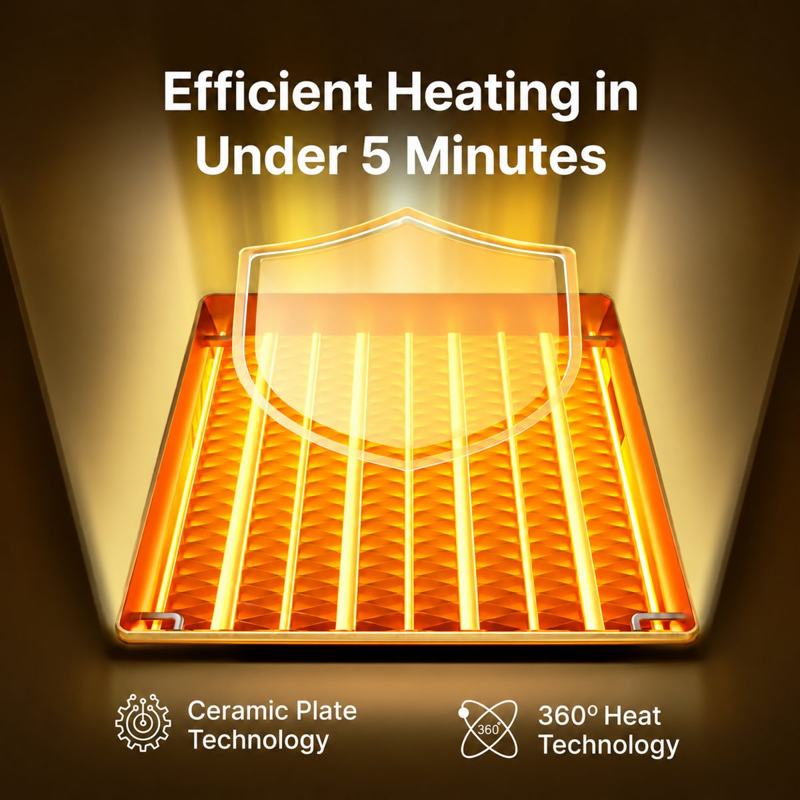
An energy efficient space heater should be judged by comfort delivered and total household energy use, not an eco label alone. RapidHeat is a 120V plug-in wall PTC ceramic heater with a digital thermostat, remote, high and eco modes, timer and overheat protection, intended for supplementary warmth in small-to-medium rooms.
Running cost calculator
Per day
CA$0.26
Per month (30 days)
CA$7.80
Estimated at ~CA$0.13/kWh. Actual rates vary by utility and time of use. A heater with a thermostat cycles off once the room is warm, so real use is often lower.
The honest truth about heater efficiency
Every electric heater turns its power into heat at about the same rate. The savings come from heating only the room you're in, using a thermostat, and switching off with a timer.
How to save with RapidHeat
Turn the central thermostat down a few degrees and use RapidHeat in the room you're using.
- Use eco mode once the room is warm
- Set the timer for bedtime
- Keep doors closed to hold the heat in
Choose your bundle
Free shipping
Prices in CAD. Most homes need one per room.
Your order
- 2 RapidHeat heatersCA$119.00
- Tracked shipping across CanadaFREE
- 30-day guaranteeIncluded
TotalCA$119.00
You save CA$200
Ships with tracking. Free across Canada. You won't be charged until you review your order.
- Free Canada shipping
- 30-day returns
- Secure checkout
Start with the difference between efficiency and consumption
Electric resistance heaters convert nearly all the electricity they consume into heat at the point of use. That does not mean every heating choice costs the same over a winter, or that a ceramic element offers a special shortcut to cheaper heat. Your actual expense depends on consumption, operating conditions and the electricity price you pay.
When shopping for an energy efficient space heater, separate three questions: does it improve comfort, how much electricity does it use in your routine, and does it reduce any other heating expense? A positive answer to the first question does not prove the third. Supplementary warmth may be worthwhile even when it adds to the bill.
| Question | Information needed | Why it matters |
|---|---|---|
| Will it improve comfort? | Room layout and safe outlet position | Useful warmth depends on real placement. |
| What will operation cost? | Confirmed consumption and your tariff | A mode label is not a cost estimate. |
| Will another heating cost fall? | Existing system and safe setting changes | Added heat is not automatically a saving. |
| How many units are needed? | Occupied rooms and electrical capacity | A bundle can add unnecessary demand. |
Understand what high and eco modes can tell you
RapidHeat offers high and eco modes alongside its digital thermostat. These give you ways to manage an occupied heating session, but the mode names do not establish a fixed saving. Without verified operating details and a comparison under the same conditions, an exact percentage reduction would be an assumption rather than useful buying advice.
Follow the instructions when choosing a mode, then assess comfort over a normal session. Avoid changing several settings at once if you want to understand the result. Record the room conditions, how long you stayed and whether you needed repeated adjustments; these observations are more useful than assuming eco always means the lowest household cost.
Use the thermostat to avoid unnecessary heating
Choose a comfortable setting rather than the highest available one. The digital thermostat supports temperature control, but it cannot repair draughts or guarantee the same temperature throughout the room. Heat loss through windows and exterior walls may make one chair feel cold even when the air near the heater has warmed.
A remote makes small adjustments convenient, and the timer helps plan the end of an attended session. Neither replaces switching the heater off when you leave. If your schedule changes, do not let the original timer plan determine whether an empty room continues receiving heat. Deliberate operating hours are central to controlling unnecessary consumption.
Treat zone heating as a household comparison
Zone heating means concentrating comfort where people are spending time instead of treating every room identically. It can be useful, but savings depend on the existing heating system and the changes you can safely make. Adding a room heater while leaving every other setting unchanged may simply increase total energy use.
Do not sharply lower central heating without considering plumbing, dampness, other occupants and building requirements. Renters should check building rules and discuss inadequate heat with their landlord. If your home uses a heat pump, compare carefully: Natural Resources Canada explains that heat pumps move heat, which differs fundamentally from resistance heating. [2](https://natural-resources.canada.ca/energy-efficiency/energy-star/heating-cooling-heat-pump)
Estimate costs from confirmed information, not a headline
A useful estimate needs confirmed appliance energy use, the duration of operation and your electricity tariff. Where your bill distinguishes time periods or usage tiers, use the rate that applies to your actual routine. Do not borrow an unrelated appliance rating or assume that every Canadian household pays the same electricity price.
Compare variable electricity charges separately from fixed charges that remain even if consumption changes. Taxes and other bill components can also affect the amount paid. If you use a calculator, check its assumptions and treat the answer as an estimate, not a promised daily cost. Thermostat-controlled operation can vary as weather and room conditions change.
Improve the room before increasing heater use
Start by keeping existing heat sources unobstructed and reporting damaged windows or persistent draughts. A door that can safely be closed may help separate an occupied room from a larger open layout, but do not compromise ventilation or the heating needs of the rest of the home. Comfort improvements should fit the building.
RapidHeat plugs directly into a suitable 120V wall outlet, so check placement before purchase. Do not use an extension cord or power bar to reach a preferred spot. A compact design does not make an outlet behind curtains or furniture suitable, and blocked airflow is not an acceptable trade-off for concentrating warmth near your chair.
Keep energy-saving habits within safe operating limits
Never make unattended operation part of a savings strategy. NFPA advises keeping combustible materials at least one metre from heating equipment and turning portable heaters off when leaving the room or going to bed. [1](https://www.nfpa.org/-/media/project/storefront/catalog/files/safety-tip-sheets/heatingsafetytips.pdf) Follow the manufacturer instructions and maintain any additional required clearance around the appliance.
Overheat protection is a backup, not a way to manage daily operation. Keep children and pets away, inspect the connection and stop if you notice burning smells, damage, unusual plug heat or repeated circuit trips. Running several appliances on different outlets does not necessarily spread demand across separate circuits; ask a qualified electrician when capacity is uncertain.
Separate the purchase price from the winter budget
One RapidHeat costs CA$79, two cost CA$119, three cost CA$159 and four cost CA$239. Free shipping in Canada and 30-day returns are offered. Start with the number of suitable occupied rooms, not the biggest bundle. Additional heaters introduce additional purchase costs and can increase electricity consumption when used together.
During the return period, evaluate practical comfort and ease of control while keeping packaging and order details. A short trial cannot prove annual savings because weather and household schedules change. For a fairer ongoing comparison, note operating habits and consider overall heating use across comparable conditions rather than attributing every difference on the next bill to one appliance.
RapidHeat: honest pros and cons
Good for
- Digital thermostat supports deliberate comfort settings.
- High and eco modes provide operating choices.
- Timer helps plan attended sessions.
- Remote makes adjustments convenient.
- Free Canadian shipping and 30-day returns.
Not ideal if
- No guaranteed reduction in household heating costs.
- Electricity expense varies with routine and tariff.
- Not a replacement for efficient whole-home heating.
- Safe outlet placement limits where it can operate.
Sources
Frequently asked questions
Is ceramic heat cheaper than other electric resistance heat?
Ceramic describes the heating element, not a guaranteed reduction in the electricity needed to provide heat. Controls and operating time can affect consumption, but the relevant comparison is actual use under similar conditions. Do not choose solely on a claim that ceramic materials create cheaper energy.
Can I calculate an exact daily cost before buying?
You need confirmed appliance energy use and your applicable electricity charges, plus a realistic operating schedule. Even then, thermostat behaviour and weather introduce uncertainty. Avoid treating a generic calculator result as a verified RapidHeat bill or a guaranteed amount for every Canadian household.
Should I turn off the furnace to use this heater?
No. Keep primary heating operating as needed for people, plumbing and the building. Any adjustment should suit your heating system and living situation. A small supplementary heater is not a replacement for a working furnace or a plan for protecting the rest of the home.
Does the timer make overnight heating appropriate?
No. Turn the heater off before going to bed. The timer is useful for planning an attended session, not for making sleeping or unattended operation safe. A thermostat and overheat protection do not change that guidance.
Is a larger bundle more energy efficient?
A bundle changes the purchase price, not the underlying heating process. Several operating units can increase consumption and electrical demand. Buy around real, safely usable rooms rather than assuming more heaters create a more efficient household.
What is the best way to judge value during the return period?
Check whether the heater makes your normal occupied routine more comfortable, whether the outlet position is safe and whether the controls are useful. Keep purchase documents and review return conditions. Separate this practical trial from any claim about long-term bill savings.
Does a space heater use a lot of electricity?
It depends on wattage, hours and your rate. Use the calculator above with your province's rate to estimate the cost.
How much does RapidHeat cost in Canada?
RapidHeat is CA$79 for one, CA$119 for two, CA$159 for three and CA$239 for four, with free shipping across Canada.
Can I return it?
Yes. Contact us within 30 days of delivery to start a return.
Related
Choose your bundle
Free shipping
Prices in CAD. Most homes need one per room.
Your order
- 2 RapidHeat heatersCA$119.00
- Tracked shipping across CanadaFREE
- 30-day guaranteeIncluded
TotalCA$119.00
You save CA$200
Ships with tracking. Free across Canada. You won't be charged until you review your order.
- Free Canada shipping
- 30-day returns
- Secure checkout
- 30-day guarantee
- Free shipping in Canada
- Secure checkout