


Quick answer
The best heater for a large room depends on heat loss, ceiling height, layout and available electrical capacity. For regular whole-room heating, consider a professionally sized heat pump or installed system. Portable heaters suit supplementary warmth in an occupied zone; a small plug-in heater cannot reliably heat a big open space.
Key takeaways
- A small portable heater can improve comfort near an occupied area, but it is not a substitute for correctly sized heating in a big open room.
Match the heater to the job
A small portable heater can improve comfort near an occupied area, but it is not a substitute for correctly sized heating in a big open room.
Choose your bundle
Free shipping
Prices in CAD. Most homes need one per room.
Your order
- 2 RapidHeat heatersCA$119.00
- Tracked shipping across CanadaFREE
- 30-day guaranteeIncluded
TotalCA$119.00
You save CA$200
Ships with tracking. Free across Canada. You won't be charged until you review your order.
- Free Canada shipping
- 30-day returns
- Secure checkout
Define what you mean by a large room
Measure the room's length and width, then note its ceiling height and every opening into adjoining spaces. A living room connected to a kitchen, staircase and hallway behaves differently from an enclosed room with the same floor area. Warm air can escape into those connected areas, while tall ceilings leave a larger volume of air to warm. Advertising coverage figures rarely describe all these conditions, so treat them as a starting point rather than a comfort guarantee.
Decide whether you need the entire space comfortable all day or only a reading chair warm for an hour. Those are different jobs. Record the temperature you can currently maintain on a cold day and whether your main heating system is working properly. If the room is much colder than the rest of the house, investigate blocked registers, control settings and building problems before buying supplementary equipment.
| Situation | Approach to assess | Important limit |
|---|---|---|
| Whole room, daily use | Professionally sized heat pump or installed heating | Check cold-weather capacity and installation needs |
| One occupied corner | Supervised portable supplementary heat | Does not guarantee even whole-room warmth |
| Open room with high ceilings | Heat-loss assessment and air distribution review | Floor area alone understates complexity |
| Room remains cold despite heating | System service and envelope improvements | More portable heaters may not solve the cause |
Estimate demand without mistaking a shortcut for a design
A common preliminary rule for electric resistance heating is about 10 watts per square foot under moderate conditions with a typical ceiling. A 300-square-foot room would therefore suggest roughly 3,000 watts of heat, not a promise that any particular portable appliance can handle it. Poor insulation, substantial glazing, outdoor design temperature and high ceilings can change the requirement considerably. A room may need less supplementary heat when the central system already supplies most of its needs.
For permanent heating, have a qualified contractor assess heat loss using local winter conditions rather than simply multiplying floor area. Ask how the proposed system will perform during the coldest weather and how heat will reach distant corners. A larger appliance is not automatically the answer: oversizing, awkward placement and insufficient electrical capacity can create other problems. Keep a rough estimate separate from the final equipment selection.
Compare installed heating with portable support
For a large room used every day, a properly selected heat pump deserves consideration. Unlike electric resistance heating, it moves heat from outside, so its electricity use can be lower for a given amount of delivered warmth. Performance varies with equipment and outdoor temperature. Ask about cold-weather capacity, backup heat, installation costs and maintenance rather than judging only the purchase price or a headline efficiency number.
Installed electric baseboards or other fixed resistance heaters may be practical where zoning and simple controls matter, but their operating cost still reflects electricity consumed. They require suitable wiring and professional installation. Portable ceramic or oil-filled heaters are easier to move and can supplement an existing system, yet neither category changes the basic heat required by the building. If the central system cannot maintain a safe temperature, repair or upgrade it instead of building a permanent solution around several portable heaters.
Choose airflow and comfort, not marketing superlatives
A fan-assisted ceramic heater provides moving warm air and a quicker sensation of warmth nearby. An oil-filled radiator releases heat more gradually and usually avoids fan noise. At equal electrical input and operating time, both resistance types contribute broadly the same heat indoors. Their differences are about delivery, response and controls, not one creating several times more heat from the same electricity.
In a long or irregular room, a comfortable spot beside a heater does not prove that the whole room has reached the thermostat setting. Check seating areas away from the appliance with a separate room thermometer. Keep air pathways open without compromising required clearances. Existing ceiling fans may help mix stratified air at a gentle setting, but strong airflow can feel draughty. Follow the fan's instructions and remember that circulating air does not add heating capacity.
Check electrical capacity before adding equipment
A large room often tempts people to plug heaters into opposite walls and assume the loads are separate. Those outlets may share one circuit with lighting, entertainment equipment or another room. Circuit capacity is a wiring question, not a question of how many sockets are available. Ask a qualified electrician to assess the planned load when more than one heater seems necessary, especially in older homes or where breakers have tripped.
Connect each portable heater directly to an appropriate, sound wall outlet, never an extension cord, power bar or multi-outlet adapter. Do not keep resetting a tripping breaker or substitute a larger breaker. Stop using an outlet that is loose, discoloured or abnormally hot and arrange inspection. A heater that cannot be connected safely in the required position is not suitable for that location, regardless of its advertised room coverage or attractive price.
Reduce the losses that make the room difficult to heat
Check accessible weatherstripping around exterior doors, obvious air leaks and window coverings before increasing heat output. Keep curtains safely away from heaters and do not block registers or returns with furniture. Close doors to unused adjoining rooms where your heating and ventilation arrangements allow it. Never block required ventilation, combustion-air openings or escape routes in an attempt to retain heat; ask a professional about persistent draughts you cannot identify.
Rooms above garages, extensions and spaces with large windows can have building-envelope issues that a new portable heater will not fix economically. Consider an energy assessment when discomfort is persistent. Renters should report inadequate heat, damaged seals or heating-system faults to the landlord rather than modifying wiring or permanent equipment. Keep enough background heat to protect plumbing and vulnerable occupants. Whole-home thermostat setbacks should suit the building, not just the comfort of one person beside a heater.
Calculate cost using realistic operating hours
For resistance heating, estimate electricity use as input in kilowatts multiplied by hours actually heating. Multiply that result by your applicable electricity rate to estimate the variable energy charge. For example, a hypothetical 1.5-kilowatt heater running continuously for four hours uses 6 kilowatt-hours. At an illustrative CA$0.15 per kilowatt-hour, that is CA$0.90, excluding any other applicable charges. These are generic figures, not specifications for a particular product.
A thermostat may reduce heating time once the room reaches its target, but a cold, leaky room can keep the heater running almost continuously. Eco labels do not establish a fixed saving. Compare the total household bill: adding portable heat while leaving the main heating unchanged generally adds consumption. Savings from zoning depend on safely reducing heat elsewhere by enough to offset the added electricity, and on the type and price of the main heating fuel.
Use small heaters honestly and safely
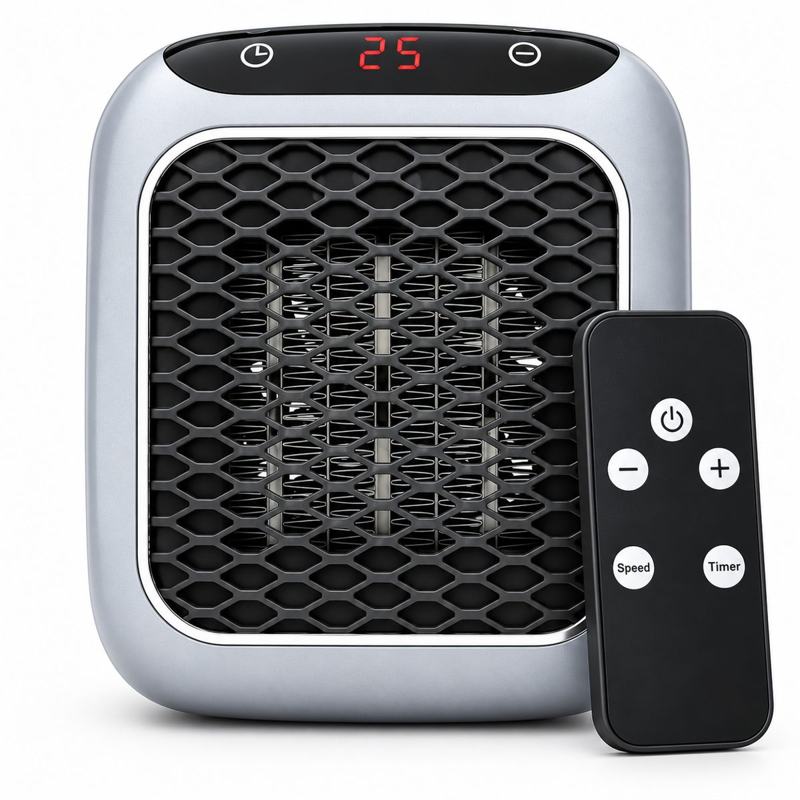
RapidHeat is a plug-in PTC ceramic option with a thermostat, eco mode, timer and overheat protection for small-to-medium rooms. It belongs in a discussion of supervised supplementary comfort, not as a promise to heat a big open-plan living area. Confirm the product label, instructions and suitability for your outlet and space before purchase. If your main requirement is reliable whole-room heat in a large area, choose equipment sized for that requirement instead.
For any portable heater, maintain at least one metre from combustible materials and follow any greater manufacturer clearance. Keep it dry, uncovered and away from children, pets and traffic. Turn it off and unplug it before leaving or sleeping; a timer and overheat protection do not replace supervision. For permanent large-room heating, prioritise a correctly installed system that can meet the design load, with portable equipment reserved for limited, attended top-up use.
Sources
Frequently asked questions
Can one small heater warm a large open-plan room?
Usually not reliably. It may improve comfort nearby, but openings, high ceilings and heat loss can exceed its output. Use a properly sized main system for whole-room heating.
Is an oil-filled heater more powerful than ceramic?
Not inherently. Compare labelled electrical input and controls. At equal input, both resistance types supply broadly equal heat; airflow and heat-up time affect how that warmth feels.
Should I run two portable heaters together?
Do not assume separate outlets mean separate circuits. Have the electrical capacity assessed before adding heavy loads, and reconsider whether installed heating is a better long-term solution.
Will a ceiling fan reduce my heating requirement?
It can improve temperature mixing where warm air collects overhead, but it does not generate heat. Use a gentle setting and address insulation, draughts and heating capacity separately.
Does a higher thermostat setting heat faster?
Usually it changes the target temperature, not the heater's maximum output. Set a reasonable target and allow time; an unreachable setting can simply extend running time.
What should a renter do about a persistently cold room?
Record temperatures and contact the landlord about the heating system or building defects. Follow applicable local housing processes rather than relying on unattended portable equipment or altering electrical wiring.
Related
Choose your bundle
Free shipping
Prices in CAD. Most homes need one per room.
Your order
- 2 RapidHeat heatersCA$119.00
- Tracked shipping across CanadaFREE
- 30-day guaranteeIncluded
TotalCA$119.00
You save CA$200
Ships with tracking. Free across Canada. You won't be charged until you review your order.
- Free Canada shipping
- 30-day returns
- Secure checkout
- 30-day guarantee
- Free shipping in Canada
- Secure checkout