


Quick answer
Electric baseboards suit permanent room heating with installed wiring and room controls. Portable space heaters suit short, supervised top-ups where a safe wall outlet and clearances are available. Both resistance types turn electricity into heat at broadly similar efficiency; savings depend on temperature settings, zoning and operating time, not portability alone.
Key takeaways
- An electric baseboard is installed room heating.
The key distinction
An electric baseboard is installed room heating. A portable space heater is movable, supervised supplementary heat. Neither resistance technology produces extra heat for free.
Choose your bundle
Free shipping
Prices in CAD. Most homes need one per room.
Your order
- 2 RapidHeat heatersCA$119.00
- Tracked shipping across CanadaFREE
- 30-day guaranteeIncluded
TotalCA$119.00
You save CA$200
Ships with tracking. Free across Canada. You won't be charged until you review your order.
- Free Canada shipping
- 30-day returns
- Secure checkout
Make sure you are comparing the right baseboard
This comparison concerns electric resistance baseboards, not hot-water baseboards connected to a boiler. An electric baseboard contains a heating element and usually warms the room through natural convection. It is generally fixed in place and controlled by a built-in or wall thermostat. A hydronic heating system has different equipment, fuel costs and controls, so you cannot compare its running cost simply by using an electric baseboard example.
Portable space heaters include ceramic fan heaters, oil-filled radiators and other designs. They use an available outlet and can be relocated when cool and disconnected, subject to their instructions. Their portability makes them convenient for temporary comfort, but it does not make them equivalent to a properly designed installed heating system. Identify what already supplies the room, how it is controlled and whether it is functioning before deciding a second source of heat is necessary.
| Factor | Portable heater | Electric baseboard |
|---|---|---|
| Typical role | Attended supplementary warmth | Installed room heating |
| Electrical connection | Suitable direct wall outlet | Appropriate permanent wiring |
| Resistance efficiency | Broadly similar | Broadly similar |
| Relocation | Move only as instructed, after cooling | Professional installation changes |
| Cost opportunity | Shorter sessions or smaller occupied zone | Room controls and appropriate setbacks |
Efficiency does not automatically favour the portable option
Electric baseboards and ordinary electric space heaters are both resistance heating. Nearly all electricity they consume becomes heat within the living space. A ceramic element, fan or oil-filled casing changes heat delivery, not the underlying conversion into room heat. Claims that replacing any baseboard with any portable heater will automatically cut consumption overlook how much heat the room loses and how long each appliance operates.
A portable unit might use less electricity in a particular routine because it heats a smaller occupied zone for fewer hours. That is a change in service delivered, not evidence of a dramatically more efficient element. Similarly, a well-controlled baseboard may already cycle only as needed in a closed room. Compare equal comfort, equal outdoor conditions and total household consumption. If both heaters run while the room target stays unchanged, you may simply have added another electrical load.
Understand when zoning can actually reduce cost
Many electric-baseboard homes already have room-by-room thermostats. Before buying another heater for an office, check whether the existing baseboard can provide comfortable heat there while other room settings are safely reduced. Use reasonable setbacks rather than shutting off rooms indiscriminately. Building layout, plumbing locations, moisture conditions and the needs of children or older occupants all affect how far temperatures can be lowered without creating problems.
A portable heater can still be helpful when one occupied spot needs a brief boost or a room warms too slowly for a short visit. Savings are possible only if the added use is offset elsewhere. Record thermostat settings, operating hours and the relevant electricity rates. If your main system is a heat pump, replacing its heat with resistance heat can increase electricity use for the same delivered warmth. Do not assume that a smaller-looking appliance always costs less to provide equivalent comfort.
Compare running costs with a transparent example
Use electrical input in kilowatts multiplied by heating hours to estimate energy in kilowatt-hours. A hypothetical 1.5-kilowatt resistance heater operating continuously for three hours uses 4.5 kilowatt-hours. At an illustrative CA$0.15 per kilowatt-hour, that is about CA$0.68 in energy charges before any other applicable bill components. The arithmetic applies to a baseboard or portable unit with that input; it is not a RapidHeat specification or a universal Canadian rate.
Thermostat cycling complicates real comparisons because three hours switched on does not necessarily mean three hours heating continuously. A lower-output heater may run longer, while a higher-output one may cycle off sooner. Weather and room temperature matter too. Use your utility's consumption information where available, noting outdoor conditions and occupancy. Do not treat fixed monthly account fees as avoidable savings, and account for time-of-use prices if your electricity plan includes them.
Installation and electrical capacity are different questions
Electric baseboards normally require appropriate permanent wiring, compatible controls and installation that follows local electrical requirements. Have a qualified electrician evaluate replacement, additional capacity or thermostat upgrades. Do not assume a thermostat intended for one type of heating can control another. The cost of installed heating includes labour and any necessary circuit work, but those costs support a permanent solution rather than leaving a portable appliance in service as a workaround.
A portable heater avoids that installation only when a suitable existing outlet and circuit are available. Two wall outlets may share one breaker with other loads, so moving to another socket may not resolve overloads. Plug directly into a sound wall outlet, not a power bar or extension cord. A tripping breaker, loose receptacle, discolouration or abnormal heat calls for investigation, not repeated resets. Never increase breaker size to accommodate a heater without a proper electrical assessment.
Comfort depends on controls and placement
Baseboards commonly sit along exterior walls or beneath windows to help counter nearby heat loss. Their performance suffers when furniture, drapes or accumulated dust interfere with permitted airflow. Follow the exact manufacturer's clearances rather than applying a generic furniture spacing rule to every installed product. A properly located wall thermostat can offer convenient room control, but a sensor exposed to a draught or nearby heat source can produce misleading results.
Portable fan heaters can give quicker local warmth, but airflow and fan noise may bother some people. Oil-filled portable models provide a different, slower sensation. Neither should be placed closer to furniture or people to compensate for an underheated room. Use an independent thermometer away from the direct heat source to judge the occupied area. If one part of the room stays cold, investigate draughts and distribution before assuming the thermostat setting or the heater category is the problem.
Keep portable and installed safety guidance distinct
A correctly installed baseboard is intended to operate under its specified controls and instructions as part of the home's heating. It still needs unobstructed airflow, appropriate clearances and maintenance. Never drape clothes over it or hide it behind storage. Report unusual smells, damaged covers or control problems and arrange appropriate service. Installed equipment should not be altered, relocated or disconnected by a renter or homeowner without qualified assistance where required.
Portable heaters require attended use: switch off and unplug before leaving or sleeping. Maintain at least one metre from combustibles and follow any greater manual clearance; keep the appliance dry and uncovered. Thermostats, timers and overheat cut-offs do not replace supervision. The operating rules for installed baseboards do not make a portable heater suitable for unattended background heat. If safe room temperatures depend on continuous heating, repair or provide an appropriate permanent system rather than relying on portable equipment.
Choose the smallest change that solves the real problem
Start by checking the existing baseboard thermostat, permitted airflow and whether the room's heating capacity is adequate. Weatherstripping and professionally assessed insulation improvements may make more difference than changing heater formats. If the issue is occasional local discomfort while you are present, supplementary portable heat may be reasonable. If the issue is a consistently cold room, investigate system faults and heat loss, and ask about installed options suited to the building and local climate.
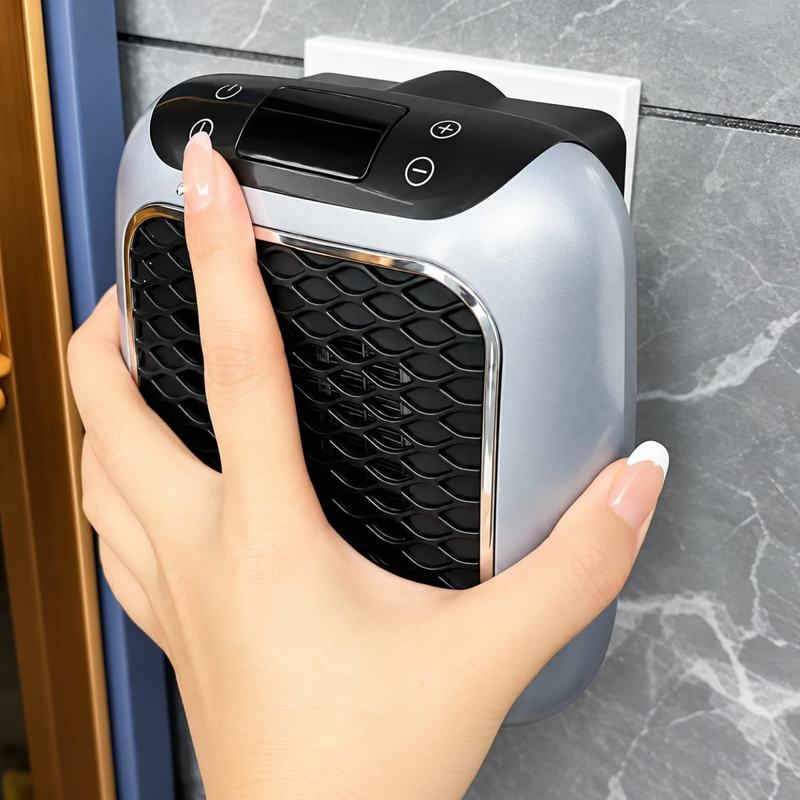
RapidHeat is a plug-in PTC ceramic heater for small-to-medium rooms with a thermostat, eco mode, timer and overheat protection. It can be considered for supervised top-up comfort, not as an automatic energy-saving replacement for installed baseboards. Check its instructions, placement requirements and product label before use. Compare the complete household heating pattern, and keep enough permanent heat for the building and its occupants when a portable unit is off.
Sources
Frequently asked questions
Will a space heater always cost less than my baseboard?
No. The result depends on input, operating hours, thermostat settings and any reduction in other heating. Adding portable heat without changing the rest of the system can increase consumption.
Can I turn the baseboard off in the room I am heating?
Only consider settings consistent with the building's needs and safe temperatures. A portable heater should not become essential unattended heat for plumbing protection or vulnerable occupants.
Are hot-water baseboards covered by this comparison?
No. They use a boiler and circulating fluid, so fuel type, system efficiency and controls matter. First identify whether your baseboards are electric resistance or part of a hydronic system.
Is a new thermostat worth considering?
A compatible, well-located control can improve temperature management. Have an electrician confirm suitability for the baseboard and wiring; a standard low-voltage thermostat is not a universal replacement.
Can I run a heater from a power bar?
No. Plug a portable heater directly into a sound wall outlet. If you lack a safe location with adequate capacity and clearance, use another heating approach or seek professional advice.
What should tenants do about faulty baseboards?
Report the problem and room temperatures to the landlord or property manager. Do not alter installed wiring or rely on sleeping with a portable heater operating while awaiting a permanent repair.
Related
Choose your bundle
Free shipping
Prices in CAD. Most homes need one per room.
Your order
- 2 RapidHeat heatersCA$119.00
- Tracked shipping across CanadaFREE
- 30-day guaranteeIncluded
TotalCA$119.00
You save CA$200
Ships with tracking. Free across Canada. You won't be charged until you review your order.
- Free Canada shipping
- 30-day returns
- Secure checkout
- 30-day guarantee
- Free shipping in Canada
- Secure checkout